Panzer IV
Panzerkampfwagen IV (Pz.Kpfw. IV, Sd.Kfz. 161)
Wartime US and British reports usually called it the “Mark IV”.
Medium tank, Germany, as described in 12 wartime documents.
Also written as Pz Kw IV, PzKw IV TANK, Panzer Kraftwagen IV.
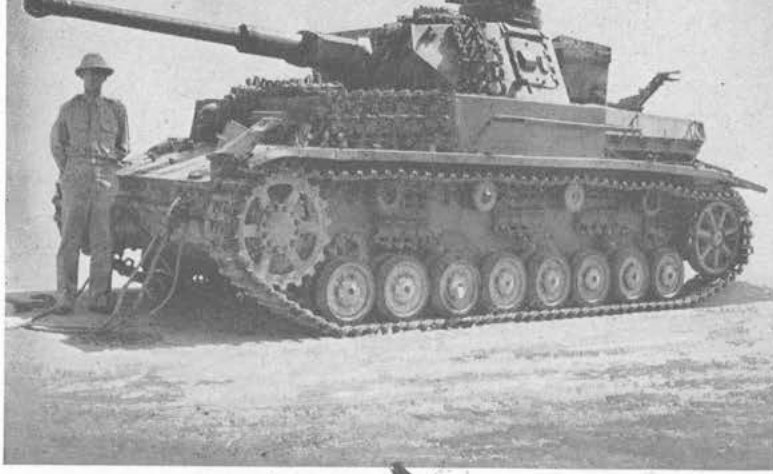
Key figures
The latest figure printed for each. Select one to see every value, its quoted sentence and its page.
- Crew
- 5 menModel G, 1944 source, 3 values
- Weight (combat)
- 26 tonsPz.Kpfw. IV with long 75-mm gun, 1944 source, 6 values
- Length
- 19 feet 4 inches (excluding gun)Model G, 1944 source, 4 values
- Width
- 9 feet 7 inchesModel G, 1944 source, 4 values
- Height
- 8 feet 6 inchesModel G, 1944 source, 4 values
- Armor — hull front
- 60 mmModel G, 1944 source, 4 values
- Armor — superstructure front
- .78 inch (20-mm)1942 source
- Armor — hull sides
- 30 mmModel G, 1944 source, 2 values
What the sources say
US War Department recognition manuals describe the Panzerkampfwagen IV (Pz Kw IV, Panzer Kraftwagen IV, Sd Kfz 161) as a German medium tank with one 75-mm gun, a coaxial machine gun and a ball-mounted machine gun [1][2]. The 1941 edition gives a crew of four or five and a weight of 22 tons [1]; the 1942 edition gives a crew of five, 20 tons in action, 320 hp and a maximum road speed of 22 mph [2].
The sources describe the armament and protection as changing over time. The 1943 Handbook on German Military Forces says the first six models mounted a short-barreled 75-mm gun, that the nose-plate armor was increased from 30 mm to 50 mm on the fifth model, and that the seventh model was the first armed with the long-barreled 75-mm gun [4]. The 1945 text in CGSC-4098 states that the long gun was fitted in 1942 and gives a later model with 26 tons in action and 25 mph maximum speed [9].
The US view moved from a 1941 note that the tank's armor had been increased recently, which should impair its performance [1], to 1944 ballistic and vulnerability tests of captured examples [6][7], to 1944 manuals that list a 26-ton weight and 25 mph maximum speed [8], and to late-1944 battlefield reports that name the Pz Kw IV among the most common types met in groups with the Pz Kw VI [11].
Specifications, source by source
Every figure as the document printed it, with the sentence it came from and a link to the page. Values run from the earliest source to the latest. 13 figures changed over time, as new models appeared and intelligence improved. On 1 attribute, sources from the same year disagree; those rows are marked in amber.
| Attribute | Value as printedSource and quoted text |
|---|---|
| Crew | Four or five FM 30-42 Identification of Foreign Armored Vehicles (1941 ed), p. 42“Crew: Four or five (driver,” Five FM 30-42 (1942), p. 58“Crew: Five (driver, hull gunner and” 5 menModel G Handbook on German Military Forces (CGSC copy) (1944), p. 389“Crew 5 men.” |
| Weight (combat) | 22 tons FM 30-42 Identification of Foreign Armored Vehicles (1941 ed), p. 42“Weight: 22 tons.” Unladen: 19 tons; in action: 20 tons 1 hundredweight FM 30-42 (1942), p. 58“In action: 20 ton:s 1 hundredweight.” Weight (approx.) 22 tons Vulnerability Tests of German Tanks PzKw III IV VI (19 July 1944), p. 16“Weight (approx.) 22 tons” 22-ton Mark IV (as described in a 1944 article) US Army-Navy Journal of Recognition Jan-Apr 1944, p. 67“Mark V serves to bridge the gap between the 22-ton Mark IV and” 26 tons (weight in action)Model G Handbook on German Military Forces (CGSC copy) (1944), p. 389“Weight in action ...26 tons.” 26 tonsPz.Kpfw. IV with long 75-mm gun Company Officer's Handbook of the German Army (1944), p. 75“(Weight, 26 tons; maximum” |
| LengthChanged over time | 17 feet (approximately) (5.18 m) FM 30-42 Identification of Foreign Armored Vehicles (1941 ed), p. 42“Length: 17 feet (approxi” 19 feet 6 inches (5.94 m) FM 30-42 (1942), p. 58“Length: 19 feet 6 inches.” 19 ft., 6 ins. (5.94 m) Vulnerability Tests of German Tanks PzKw III IV VI (19 July 1944), p. 16“Length 19 ft., 6 ins.” 19 feet 4 inches (excluding gun) (5.89 m)Model G Handbook on German Military Forces (CGSC copy) (1944), p. 390“(excluding gun)” |
| WidthChanged over time | 7 feet 3 inches (2.21 m) FM 30-42 Identification of Foreign Armored Vehicles (1941 ed), p. 42“Width: 7 feet 3 inches.” 9 feet 4 inches (2.84 m) FM 30-42 (1942), p. 58“Width: 9 feet 4 inches.” 9 ft., 4 ins. (2.84 m) Vulnerability Tests of German Tanks PzKw III IV VI (19 July 1944), p. 16“Width 9 ft., 4 ins.” 9 feet 7 inches (2.92 m)Model G Handbook on German Military Forces (CGSC copy) (1944), p. 390“9 feet 7 inches.” |
| HeightChanged over time | 8 feet 6 inches (2.59 m) FM 30-42 Identification of Foreign Armored Vehicles (1941 ed), p. 42“Height: 8 feet 6 inches.” 8 feet 9 inches (2.67 m) FM 30-42 (1942), p. 58“Height: 8 feet 9 inches.” 8 ft., 9 ins. (2.67 m) Vulnerability Tests of German Tanks PzKw III IV VI (19 July 1944), p. 16“Height 8 ft., 9 ins.” 8 feet 6 inches (2.59 m)Model G Handbook on German Military Forces (CGSC copy) (1944), p. 390“8 feet 6 inches.” |
| Main armament | One 75-mm gun (75 mm) FM 30-42 Identification of Foreign Armored Vehicles (1941 ed), p. 42“Armament: One 75-mm” One 75-mm gun (75 mm) FM 30-42 (1942), p. 58“Armament: One 75-mm gun; one” 7.5-cm (2.95-in) tank gun (short) (75 mm)short-barreled, mounted in the old Pz Kw IV Pocket Book of the German Army 1943 (CIGS), p. 148“mounted in the old Pz Kw IV tank” 7.5-cm (2.95-in) tank gun (long), KwK 40 (75 mm)long-barreled, mounted in the newer Pz Kw IV Pocket Book of the German Army 1943 (CIGS), p. 148“is mounted in the newer Pa Kw IV” One 75mm KwK (75 mm)short-barreled (early) Vulnerability Tests of German Tanks PzKw III IV VI (19 July 1944), p. 16“One 75mm KwK” One 75mm KwK 40 on later models (75 mm)long-barreled (later) Vulnerability Tests of German Tanks PzKw III IV VI (19 July 1944), p. 16“One 75mm KwK 40 on later models” |
| Secondary armament | One machine gun coaxially mounted; one machine gun in ball mounting FM 30-42 (1942), p. 58“machine gun coaxially mounted; one” One M.G. 34 mounted coaxially; one M.G. 34 in front of hull Vulnerability Tests of German Tanks PzKw III IV VI (19 July 1944), p. 16“One M.G. 34 mounted coaxially” |
| Ammunition stowage | 75-mm-83 rounds (armor piercing, high explosive and smoke); machine gun-27 belts each of 75 rounds FM 30-42 (1942), p. 58“75-mm-83 rounds” |
| Armor — hull frontChanged over time | 1.18 inches (30-mm) plus 30-mm extra plate in front of driver and hull gunners compartment (30 mm + 30 mm extra plate) FM 30-42 (1942), p. 58“Front: 1.18 inches (30-mm) plus 30-” increased from 30 mm to 50 mm (nose plate, from fifth model) (50 mm)fifth model onward Handbook on German Military Forces (TM-E 30-451, 1 Sept 1943), p. 136“nose-plate armor was increased from 30 mm to 50” 2 inch (turret front and upper hull front plate, 1944 ballistic diagram) (51 mm) Ordnance Terminal Ballistic Data Vol II Artillery Fire (1944), p. 49“UPPER HULL-FRONT” 60 mmModel G Handbook on German Military Forces (CGSC copy) (1944), p. 390“Armor, Front now plate. 60 mm.” |
| Armor — superstructure front | .78 inch (20-mm) (20 mm) FM 30-42 (1942), p. 58“Upper structure: .78 inch (20-mm).” |
| Armor — hull sidesChanged over time | 20-mm plus 20-mm extra plate for hull superstructure and mid-part of hull (20 mm + 20 mm extra plate) FM 30-42 (1942), p. 58“plus 20-mm extra plate for hull superstructure and mid-” 30 mmModel G Handbook on German Military Forces (CGSC copy) (1944), p. 390“Hull sides … 30 mm.” |
| Armor — hull rear | 20 mmModel G Handbook on German Military Forces (CGSC copy) (1944), p. 390“Hull rear 20 mm.” |
| Armor — turret frontChanged over time | 2 inch (51 mm) Ordnance Terminal Ballistic Data Vol II Artillery Fire (1944), p. 49“TURRET FRONT 2" THICK” 40 mmModel G Handbook on German Military Forces (CGSC copy) (1944), p. 390“Turret front 40 mm.” |
| Armor — turret sides | 30 mmModel G Handbook on German Military Forces (CGSC copy) (1944), p. 390“Turret sides … 3O mm.” |
| Armor — thickest (general) | Thickest known 1.18-inch to 1.57-inch (30 mm to 39.9 mm) FM 30-42 Identification of Foreign Armored Vehicles (1941 ed), p. 42“Thickest known 1.18-inch to 1.57-” |
| Engine | V-12, 4-stroke; water cooled FM 30-42 (1942), p. 58“Type: V-12, 4-stroke.” Maybach V12—320 h.p. Vulnerability Tests of German Tanks PzKw III IV VI (19 July 1944), p. 16“Maybach V12—320 h.p.” Ma,-bath HT, 120 TRXTModel G Handbook on German Military Forces (CGSC copy) (1944), p. 390“Ma,-bath HT, 120 TRXT” |
| HorsepowerChanged over time | 350 (261 kW) FM 30-42 Identification of Foreign Armored Vehicles (1941 ed), p. 42“Horsepower: 350.” 320 (239 kW) FM 30-42 (1942), p. 58“Horsepower: 320.” 295 HP at 3,000 rpm (BHP) (220 kW)Model G Handbook on German Military Forces (CGSC copy) (1944), p. 390“BHP 295 HP at 3,000 rpm.” |
| Horsepower per ton | 15.9 FM 30-42 Identification of Foreign Armored Vehicles (1941 ed), p. 42“Horsepower per ton: 15.9” 14.5 FM 30-42 (1942), p. 58“Horsepower per ton: 14.5” |
| Maximum speed (road)Changed over time | 31 miles per hour (road) (49.9 km/h) FM 30-42 Identification of Foreign Armored Vehicles (1941 ed), p. 42“Road: 31 miles per hour.” 22 mph (35.4 km/h) FM 30-42 (1942), p. 58“Maximum: 22 mph.” 30 MPH (recognition card 'SPEED') (48.3 km/h) FM 30-40 Recognition Pictorial Manual on Armored Vehicles (1943), p. 132“SPEED - 30 MPH” 25 miles per hour (40.2 km/h)Pz.Kpfw. IV with long 75-mm gun Company Officer's Handbook of the German Army (1944), p. 75“maximum speed, 25 miles per hour;” 25 miles per hour (40.2 km/h)Model G Handbook on German Military Forces (CGSC copy) (1944), p. 390“Maximum speed … 25 miles per hour.” |
| Speed (road, sustained) | 20 miles per hour (32.2 km/h)Model G Handbook on German Military Forces (CGSC copy) (1944), p. 390“Road speed, 20 miles per hour.” |
| Speed (cross-country)Changed over time | 14 mph (22.5 km/h) FM 30-42 (1942), p. 58“Cross-country: 14 mph.” 10 to 15 miles per hour (16 to 24 km/h)Model G Handbook on German Military Forces (CGSC copy) (1944), p. 390“Cross-country speed.” |
| Range / radius of actionSame-year sources disagree | 100 miles (operating distance without refill) (161 km) FM 30-42 (1942), p. 58“Operating distance without refill:” 130 miles on roads (209 km)Model G Handbook on German Military Forces (CGSC copy) (1944), p. 390“Range on roads” 80 miles cross country (129 km)Model G Handbook on German Military Forces (CGSC copy) (1944), p. 390“Range cross country. .80 miles.” |
| Fuel capacity | 126 gallonsModel G Handbook on German Military Forces (CGSC copy) (1944), p. 390“Fuel capacity 126 gallons.” |
| Trench crossingChanged over time | 7 feet wide (2.13 m) FM 30-42 (1942), p. 58“Crosses trenches 7 feet wide.” 9.0 ft (recognition card 'TRENCH') (2.74 m) FM 30-40 Recognition Pictorial Manual on Armored Vehicles (1943), p. 132“TRENCH - 9.0'” 9 ft (2.74 m) Vulnerability Tests of German Tanks PzKw III IV VI (19 July 1944), p. 16“Trench crossing ability 9 ft.” 9 feet (2.74 m)Model G Handbook on German Military Forces (CGSC copy) (1944), p. 390“9 feet.” |
| FordingChanged over time | 3 feet 6 inches deep (1.07 m) FM 30-42 Identification of Foreign Armored Vehicles (1941 ed), p. 42“Fords streams 3 feet 6” 2 feet 7 inches deep (0.79 m) FM 30-42 (1942), p. 58“Fords streams 2 feet 7 inches deep.” 3 ft (0.91 m) Vulnerability Tests of German Tanks PzKw III IV VI (19 July 1944), p. 16“Fording depth 3 ft.” 3 feet (0.91 m)Model G Handbook on German Military Forces (CGSC copy) (1944), p. 390“Fording … 3 feet.” |
| Step / vertical obstacleChanged over time | 2 feet high (0.61 m) FM 30-42 (1942), p. 58“Negotiates vertical obstacle 2 feet” 3 ft (0.91 m) Vulnerability Tests of German Tanks PzKw III IV VI (19 July 1944), p. 16“Step 3 ft.” 2 feet 6 inches (0.76 m)Model G Handbook on German Military Forces (CGSC copy) (1944), p. 390“2 feet 6 inches.” |
| Gradient | 27° slope FM 30-42 (1942), p. 58“Climbs 27° slope.” Maximum gradient 27° Vulnerability Tests of German Tanks PzKw III IV VI (19 July 1944), p. 16“Maximum gradient 27°” 30”Model G Handbook on German Military Forces (CGSC copy) (1944), p. 390“30”.” |
| Ground clearanceChanged over time | 16 inches (40.6 cm) FM 30-42 (1942), p. 58“Ground clearance: 16 inches.” 15 ins. (38.1 cm) Vulnerability Tests of German Tanks PzKw III IV VI (19 July 1944), p. 16“Ground clearance 15 ins.” 1 foot 3 inches (38.1 cm)Model G Handbook on German Military Forces (CGSC copy) (1944), p. 390“foot 3 inches.” |
| Suspension | Caterpillar eight independent rollers; eight small bogie wheels; four track support wheels FM 30-42 Identification of Foreign Armored Vehicles (1941 ed), p. 42“eight small bogie wheels; four track support wheels.” Eight small bogie wheels mounted and sprung in pairs by quarter-elliptic springs; rear idler; four return rollers FM 30-42 (1942), p. 58“Mounted and sprung in pairs by quarter-elliptic springs” Eight 18" twin bogie wheels (457 mm) Vulnerability Tests of German Tanks PzKw III IV VI (19 July 1944), p. 16“Eight 18" twin bogie wheels” Four bogie assemblies, each with two rubber-tired bogie wheels; quarter-elliptic springingModel G Handbook on German Military Forces (CGSC copy) (1944), p. 390“elliptic springing.” |
| Radio | Radio FM 30-42 Identification of Foreign Armored Vehicles (1941 ed), p. 42“Communications: Radio.” W/T FM 30-42 (1942), p. 58“Communication: Wr/T.” |
What Allied intelligence knew, and when
The 1941 recognition edition gives 22 tons, 350 hp, 31 mph road speed and armor of 1.18 to 1.57 inches, and says the armor plating 'has been increased recently which should impair its performance'.
FM 30-42 Identification of Foreign Armored Vehicles (1941 ed), p. 42
The 1942 edition lists 20 tons in action, 320 hp, 22 mph maximum road speed, 30-mm front plate with an extra 30-mm plate, and a 75-mm gun with 83 rounds stowed.
The 1945 TM-E 30-451 text carried in CGSC-4098 says the tank was rearmed in 1942 with the long-barreled 7.5 cm KwK 40 and changed role from close support to fighting tank.
Handbook on German Military Forces (CGSC copy) (1944), p. 389
The FM 30-40 recognition card says early models had a short-barreled 75-mm gun later replaced by a long-barreled 75-mm weapon, and that the tank 'appears in quantity on the battlefield'.
FM 30-40 Recognition Pictorial Manual on Armored Vehicles (1943), p. 132
A 1943 planning note assumes all Pz Kw IV will be armed with long 7.5-cm tank guns, based on Libyan experience.
TM-E 30-451 (1 Sept 1943) says at least seven models exist, the first six with the short 75-mm gun, the fifth with nose-plate armor increased from 30 mm to 50 mm, and the seventh the first with the long gun.
Handbook on German Military Forces (TM-E 30-451, 1 Sept 1943), p. 136
The 1944 ballistic data diagram labels turret front and upper hull front plates as 2 inch thick for vulnerability computations.
Ordnance Terminal Ballistic Data Vol II Artillery Fire (1944), p. 49
The 1944 Company Officer's Handbook gives the long-gun Pz.Kpfw. IV as 26 tons with maximum speed 25 mph.
The same handbook says there is a trend to replace the Pz.Kpfw. III and even the Pz.Kpfw. IV with the Panther and Tiger as those become available.
A Jan-Apr 1944 recognition journal refers to the '22-ton Mark IV' when introducing the Panther.
A late-1944 intelligence bulletin lists the Pz. Kpfw. VI and Pz. Kpfw. IV as the most common types in the groups its authors encountered.
The same bulletin reports firing on a 'Pz. Kpfw. IV Special', which was hit in the track and whose gunner kept firing after the crew bailed out.
The 19 July 1944 vulnerability test report gives weight 22 tons, 320 hp, 9-ft trench crossing, 27 degree gradient and a 75mm KwK or KwK 40 on later models.
Vulnerability Tests of German Tanks PzKw III IV VI (19 July 1944), p. 16
A February 1945 bulletin describes a 4-barrelled 20-mm Flakvierling 38 self-propelled AA weapon mounted on the standard Pz.Kpfw. IV chassis.
The March 1945 TM-E 30-451 text carried in CGSC-4098 gives the Model G/H specifications used in the Armor, Dimension and Performance entries above.
Handbook on German Military Forces (CGSC copy) (1944), p. 390
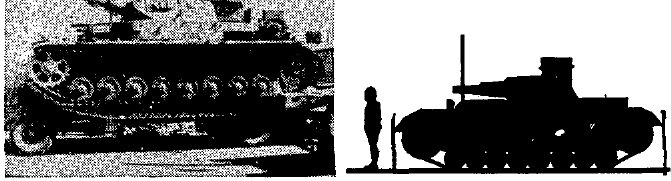
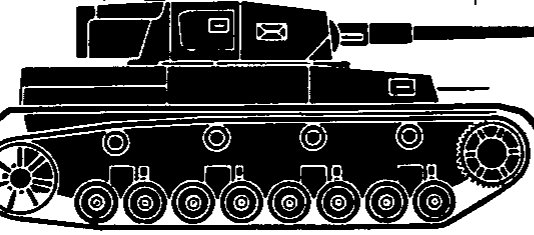
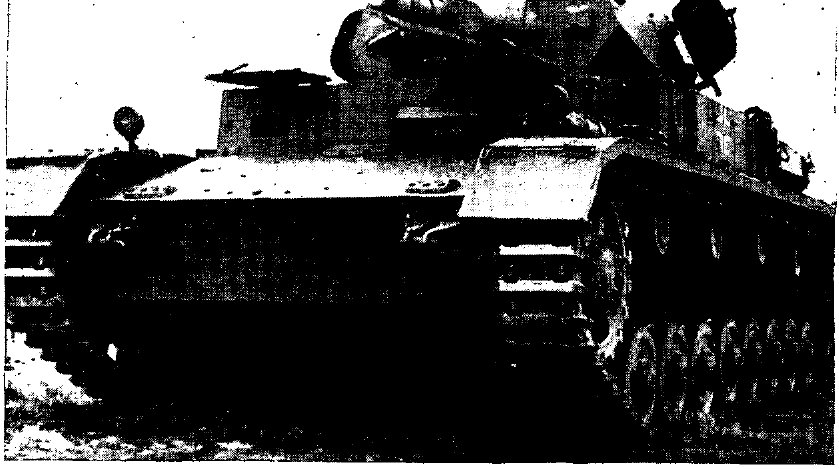
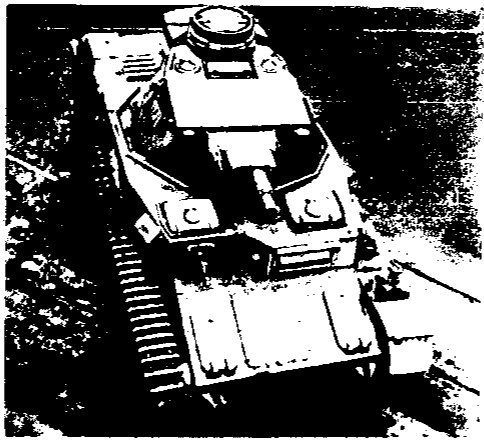
Photographs and drawings
Cropped from wartime documents, including some not otherwise cited on this page. Each caption says what the picture is and links to the page it was printed on.
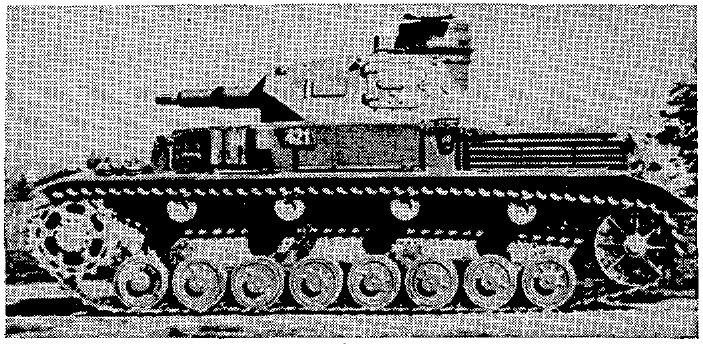
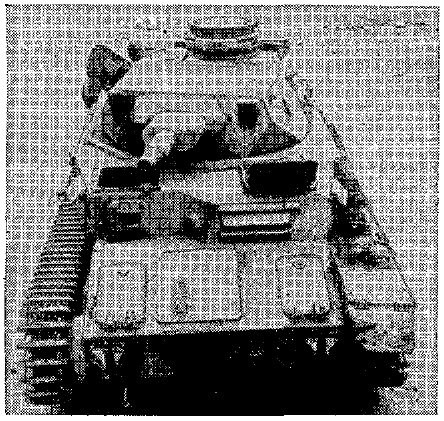
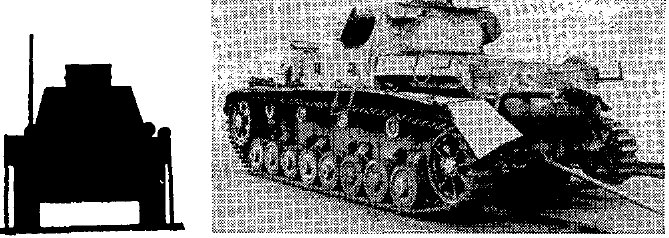
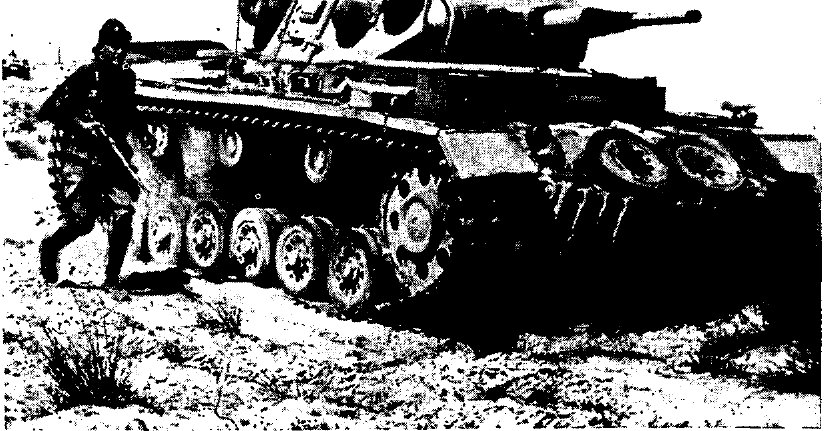
Cited pages published on this site, as scanned:
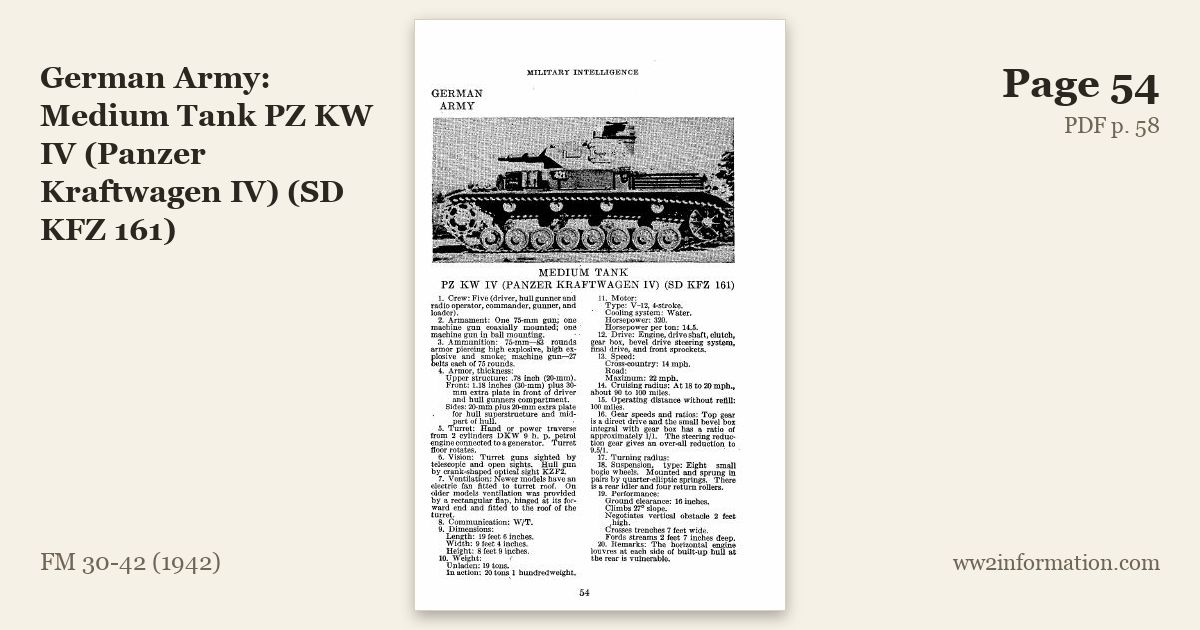
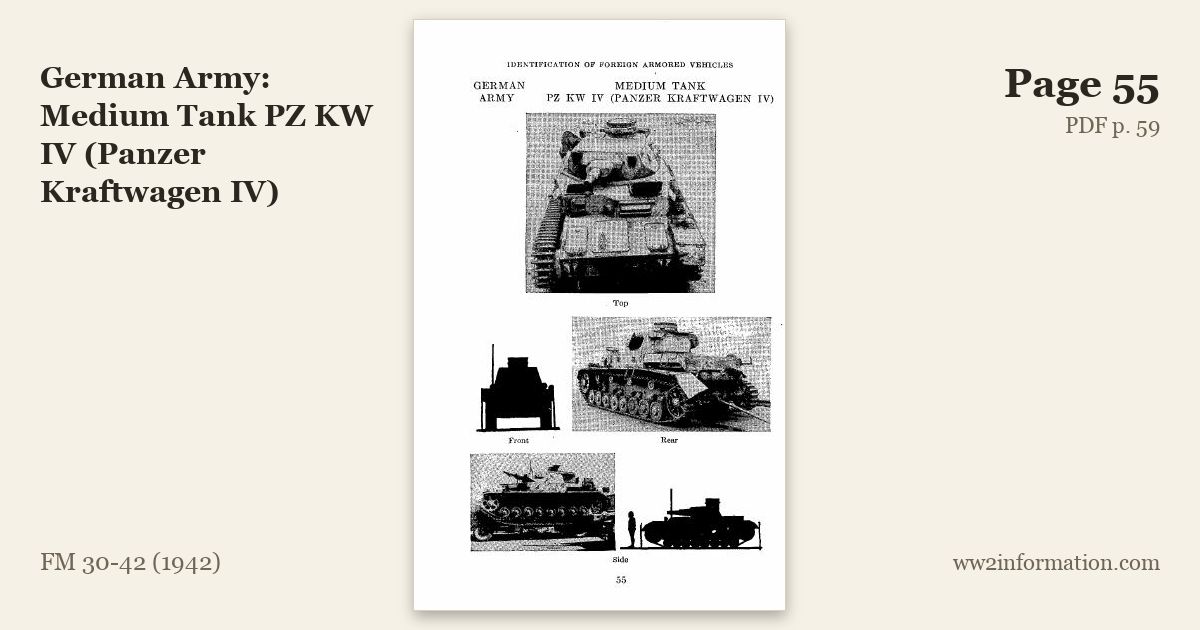
More vehicles
Sources
- [1]FM 30-42 Identification of Foreign Armored Vehicles (1941 ed) (1941). Pages cited: 42, 43. Not on this site yet; links go to the page on the Internet Archive.
- [2]FM 30-42 Identification of Foreign Armored Vehicles (German, Japanese, Russian, Italian) (1942). Pages cited: 58, 59.
- [3]FM 30-40 Recognition Pictorial Manual on Armored Vehicles (1943). Page cited: 132. Not on this site yet; links go to the page on the Internet Archive.
- [4]Handbook on German Military Forces (TM-E 30-451, 1 Sept 1943) (1943). Pages cited: 135, 136. Not on this site yet; links go to the page on the Internet Archive.
- [5]Pocket Book of the German Army 1943 (CIGS) (1943). Pages cited: 75, 148. Not on this site yet; links go to the document on the CGSC Digital Library.
- [6]Vulnerability Tests of German Tanks PzKw III IV VI (19 July 1944) (1944). Pages cited: 16, 17. Not on this site yet; links go to the document on the CGSC Digital Library.
- [7]Ordnance Terminal Ballistic Data Vol II Artillery Fire (1944). Page cited: 49. Not on this site yet; links go to the document on the CGSC Digital Library.
- [8]Company Officer's Handbook of the German Army (1944). Pages cited: 73, 75, 78. Not on this site yet; links go to the page on the Internet Archive.
- [9]Handbook on German Military Forces (CGSC copy) (1944). Pages cited: 385, 389, 390. Not on this site yet; links go to the document on the CGSC Digital Library.
- [10]US Army-Navy Journal of Recognition Jan-Apr 1944 (1944). Page cited: 67. Not on this site yet; links go to the page on the Internet Archive.
- [11]Intelligence Bulletin Vol 3 No 4 (Dec 1944) (1944). Pages cited: 55, 56. Not on this site yet; links go to the page on the Internet Archive.
- [12]Intelligence Bulletin Vol 3 No 6 (Feb 1945) (1945). Page cited: 47. Not on this site yet; links go to the page on the Internet Archive.