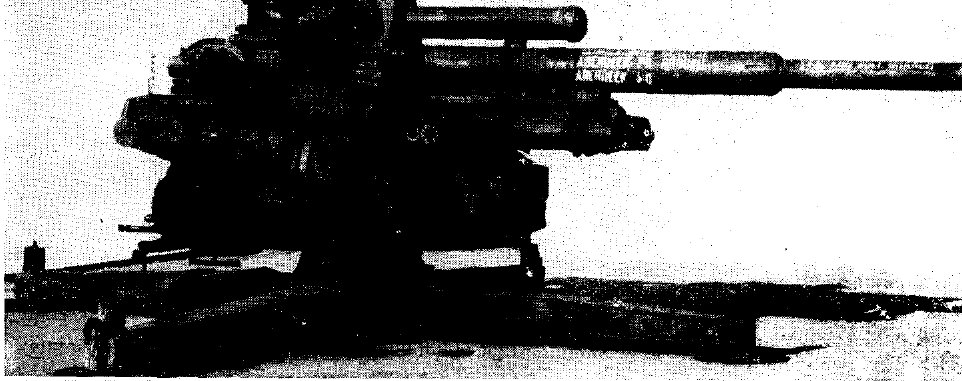
8.8 cm Flak (the "88")
8.8 cm Flak 18/36/37 (Flak 18/36/37)
Wartime US and British reports usually called it the “88-mm antiaircraft gun”.
Antiaircraft / antitank gun, Germany, as described in 7 wartime documents.
Also written as 8.8 cm Flak 18/36/37 (88-mm AA gun), 8.8 cm Flak 18, 8.8 cm Flak 36, 88-mm (Flak 36), 88-mm antiaircraft-antitank gun, 88-mm dual-purpose gun.
Key figures
The latest figure printed for each. Select one to see every value, its quoted sentence and its page.
- Caliber
- 88 mm (3.46 in bore)Flak 36 row, 1943 table, 1943 source
- Weight (firing position / traveling)
- 7 tonsMilitary Intelligence bulletin, May 1943, 1943 source, 2 values
- Muzzle velocity
- 2,600 ft/sFlak 36 row, 1943 table, 1943 source, 2 values
- Length
- 194.1 inGun and tube, TM E9-369A, 1943 source
- Traverse
- 360°Mount, 1945 source
- Rate of fire
- 20 rounds per minutePractical rate at an aerial target, 1943 source, 2 values
- Maximum range (horizontal)
- 16,200 yd1943 source
- Ceiling (effective)
- 25,000 ftAt 70° elevation, 1943 source
What the sources say
The 8.8 cm Flak 18, 36 and 37 was a German antiaircraft gun that could also fire at ground targets. The 1943 manual on the gun says it "may be used for direct fire as in antitank work, for indirect fire, or for antiaircraft fire" [1]. The 1945 handbook says the gun was first produced in 1934 as the standard mobile antiaircraft gun [2].
The armor-piercing figures are the main evidence for its antitank role. The 1942 Tactical and Technical Trends table gives 4.72 inches of penetration at 1,000 yards at 90 degrees, and 4.21 inches at 60 degrees [4]. The 1943 manual's APCBC table gives 5.07 inches at 500 yards and 4.68 inches at 1,000 yards for normal impact [1]. A May 1943 intelligence bulletin says the Army had to borrow these guns from the Air Force flak units, and that Rommel was able to get large numbers for a purely antitank role [5].
In the Cyrenaica fighting of June 1941, the guns of the 33d AA Regiment knocked out British infantry tanks at long range; a battery claim credits one tank for every 20 shells fired [6].
Specifications, source by source
Every figure as the document printed it, with the sentence it came from and a link to the page. Values run from the earliest source to the latest. 2 figures changed over time, as new models appeared and intelligence improved. On 2 attributes, sources from the same year disagree; those rows are marked in amber.
| Attribute | Value as printedSource and quoted text |
|---|---|
| Caliber | 88 mm (3.46 in bore) (88 mm)Flak 36 row, 1943 table Handbook on German Military Forces (TM-E 30-451), 1 Sept 1943, p. 148“88-mm (Flak 36) | 3.46” |
| Weight (firing position / traveling) | 7 tons (about 6,350 kg)Flak 36 row, 1943 table Handbook on German Military Forces (TM-E 30-451), 1 Sept 1943, p. 148“88-mm (Flak 36) | 3.46 | 2,600 | 7 tons” 7 tons (about 6,350 kg)Military Intelligence bulletin, May 1943 Intelligence Bulletin, Vol. 1 No. 9 (May 1943), p. 59“the 7 tons of the 88-mm” |
| Muzzle velocityChanged over time | 2,690 ft/s (820 m/s)88-mm AA gun, TM E9-369A TM E 9-369A: German 88-mm Antiaircraft Gun Materiel (1943), p. 6“Muzzle velocity 2,690 ft per se c” 2,600 ft/s (792 m/s)Flak 36 row, 1943 table Handbook on German Military Forces (TM-E 30-451), 1 Sept 1943, p. 148“88-mm (Flak 36) | 3.46 | 2,600” |
| Length | 194.1 in (493.8 cm)Gun and tube, TM E9-369A TM E 9-369A: German 88-mm Antiaircraft Gun Materiel (1943), p. 6“Over-all length of gun and tube 194 .1 in” |
| Elevation | −3° to +85°Mount Handbook on German Military Forces (TM-E 30-451), March 1945, p. 353“Elevation … —3” to + 85”.” |
| Traverse | 360°Mount Handbook on German Military Forces (TM-E 30-451), March 1945, p. 353“Traverse 360°.” |
| Rate of fire | 15 rounds per minutePractical rate at a mechanized target TM E 9-369A: German 88-mm Antiaircraft Gun Materiel (1943), p. 6“15 rounds per min (practical rat e at a mechanized target )” 20 rounds per minutePractical rate at an aerial target TM E 9-369A: German 88-mm Antiaircraft Gun Materiel (1943), p. 6“20 rounds per min (practi- cal rate at an aerial target )” |
| Maximum range (horizontal) | 16,200 yd (14,800 m) TM E 9-369A: German 88-mm Antiaircraft Gun Materiel (1943), p. 6“Maximum range : Horizontal 16,200 y d” |
| Ceiling (effective) | 25,000 ft (7,620 m)At 70° elevation TM E 9-369A: German 88-mm Antiaircraft Gun Materiel (1943), p. 6“Maximum effective ceiling 25,000 ft (at 70-deg elevation )” |
| Ceiling (maximum) | 39,000 ft (11,887 m)Vertical range TM E 9-369A: German 88-mm Antiaircraft Gun Materiel (1943), p. 6“Vertical 39,000 f t” |
| Crew | 6 menTime to change position (approx.) TM E 9-369A: German 88-mm Antiaircraft Gun Materiel (1943), p. 9“with 6-ma n crew (approx .)” |
| Projectile weight | 21 lb (APCBC) (9.5 kg)APCBC round, 1943 table Handbook on German Military Forces (TM-E 30-451), 1 Sept 1943, p. 148“88-mm (Flak 36) | 3.46 | 2,600 | 7 tons | APCBC | 21 lbs.” |
| Penetration (APCBC, normal impact)Same-year sources disagree | 5.07 in at 500 yd (129 mm at 457 m)APCBC, homogeneous plate, normal impact TM E 9-369A: German 88-mm Antiaircraft Gun Materiel (1943), p. 95“500 5 .07 4 .33” 4.68 in at 1,000 yd (119 mm at 914 m)APCBC, homogeneous plate, normal impact TM E 9-369A: German 88-mm Antiaircraft Gun Materiel (1943), p. 95“1,000 4 .68 3 .97” 4.33 in at 1,500 yd (110 mm at 1372 m)APCBC, homogeneous plate, normal impact TM E 9-369A: German 88-mm Antiaircraft Gun Materiel (1943), p. 95“1,500 4 .33 3.6 2” 3.93 in at 2,000 yd (100 mm at 1829 m)APCBC, homogeneous plate, normal impact TM E 9-369A: German 88-mm Antiaircraft Gun Materiel (1943), p. 95“2,000 3 .93 3 .30” |
| Penetration (APCBC, 30° impact)Same-year sources disagree | 4.33 in at 500 yd (110 mm at 457 m)APCBC, homogeneous plate, 30° impact TM E 9-369A: German 88-mm Antiaircraft Gun Materiel (1943), p. 95“500 5 .07 4 .33” 3.97 in at 1,000 yd (101 mm at 914 m)APCBC, homogeneous plate, 30° impact TM E 9-369A: German 88-mm Antiaircraft Gun Materiel (1943), p. 95“1,000 4 .68 3 .97” 3.62 in at 1,500 yd (92 mm at 1372 m)APCBC, homogeneous plate, 30° impact TM E 9-369A: German 88-mm Antiaircraft Gun Materiel (1943), p. 95“1,500 4 .33 3.6 2” 3.30 in at 2,000 yd (84 mm at 1829 m)APCBC, homogeneous plate, 30° impact TM E 9-369A: German 88-mm Antiaircraft Gun Materiel (1943), p. 95“2,000 3 .93 3 .30” |
| Penetration (AP, 90° and 60°)Changed over time | 4.72 in at 1,000 yd (90°) (120 mm at 914 m)AP projectile, homogeneous armor, 90°; 4.21 in at 60° Tactical and Technical Trends No. 12 (1942), p. 15“88-mm Antiaircraft-Antitank Gun Range (yards) Penetration (inches) (at 90°) (at 60°) 1,000 4.72 4.21 1,500 4.17 3.66 2,000 3.66 3.15” 4.17 in at 1,500 yd (90°) (106 mm at 1372 m)AP projectile, homogeneous armor, 90°; 3.66 in at 60° Tactical and Technical Trends No. 12 (1942), p. 15“88-mm Antiaircraft-Antitank Gun Range (yards) Penetration (inches) (at 90°) (at 60°) 1,000 4.72 4.21 1,500 4.17 3.66 2,000 3.66 3.15” 3.66 in at 2,000 yd (90°) (93 mm at 1829 m)AP projectile, homogeneous armor, 90°; 3.15 in at 60° Tactical and Technical Trends No. 12 (1942), p. 15“88-mm Antiaircraft-Antitank Gun Range (yards) Penetration (inches) (at 90°) (at 60°) 1,000 4.72 4.21 1,500 4.17 3.66 2,000 3.66 3.15” |
| Sights | ZF 20E telescope for direct fireAntitank / direct-laying use TM E 9-369A: German 88-mm Antiaircraft Gun Materiel (1943), p. 110“For direct fire the telescopic sight ZF .20E (Zielfernrohr 20E ) is used” |
What Allied intelligence knew, and when
Gun first produced in 1934 as the standard mobile antiaircraft gun (1945 handbook).
Handbook on German Military Forces (TM-E 30-451), March 1945, p. 352
Capuzzo, 16 June 1941: the 88-mm guns knocked out eight infantry tanks.
Development of German Defensive Tactics in Cyrenaica, 1941, p. 37
Army begins to take control of the antitank 88 from the Air Force (May 1943 report).
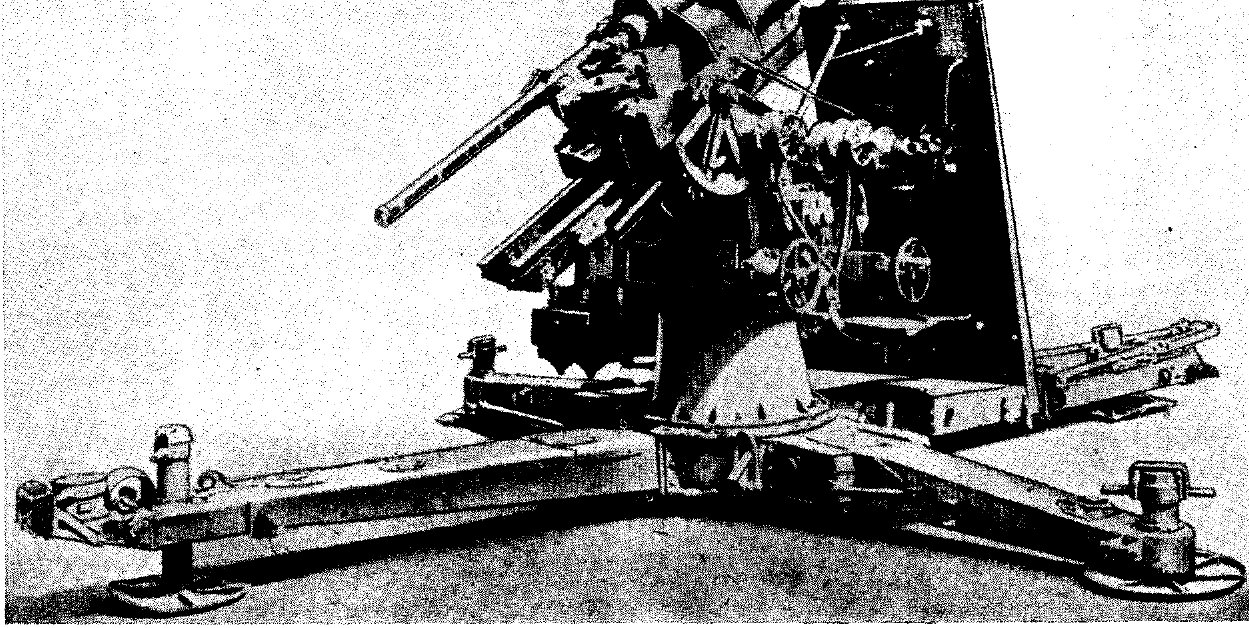
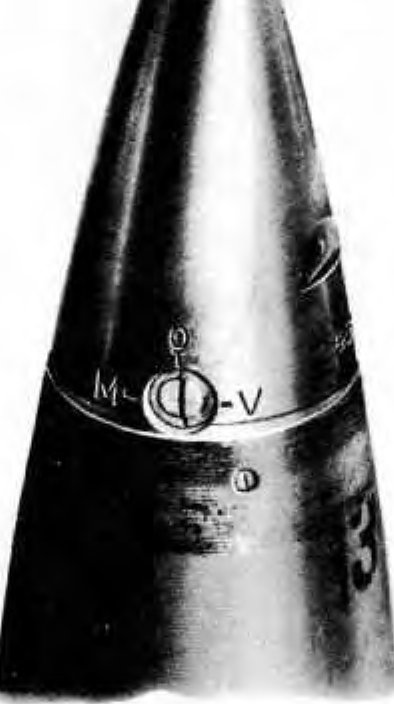
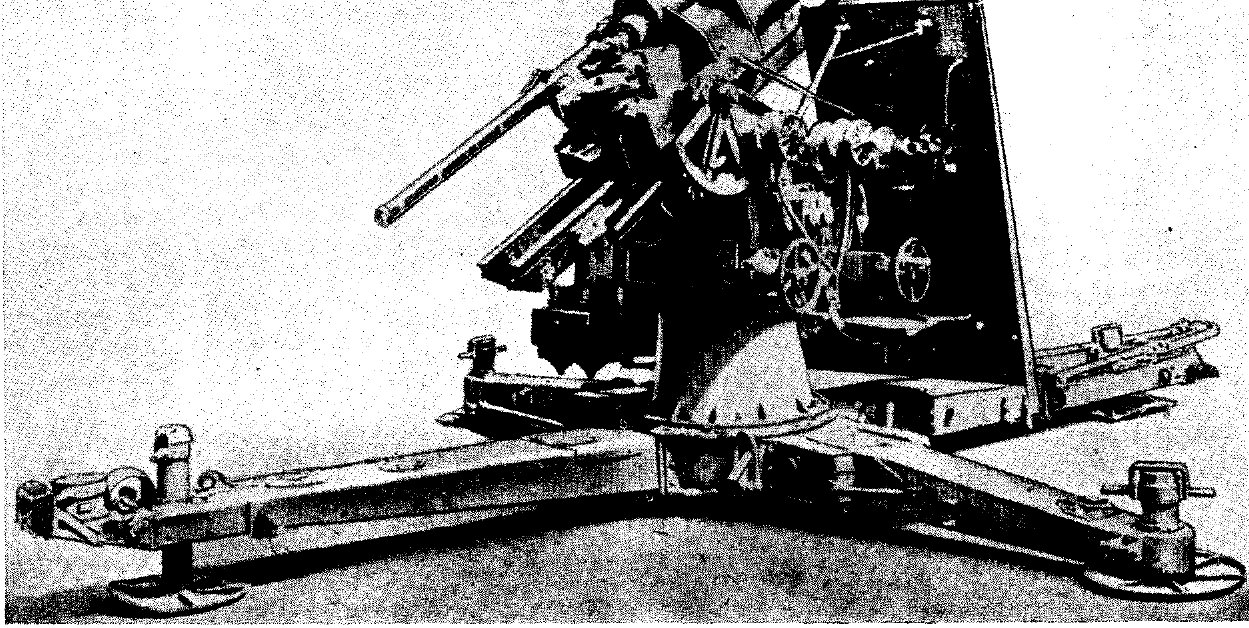
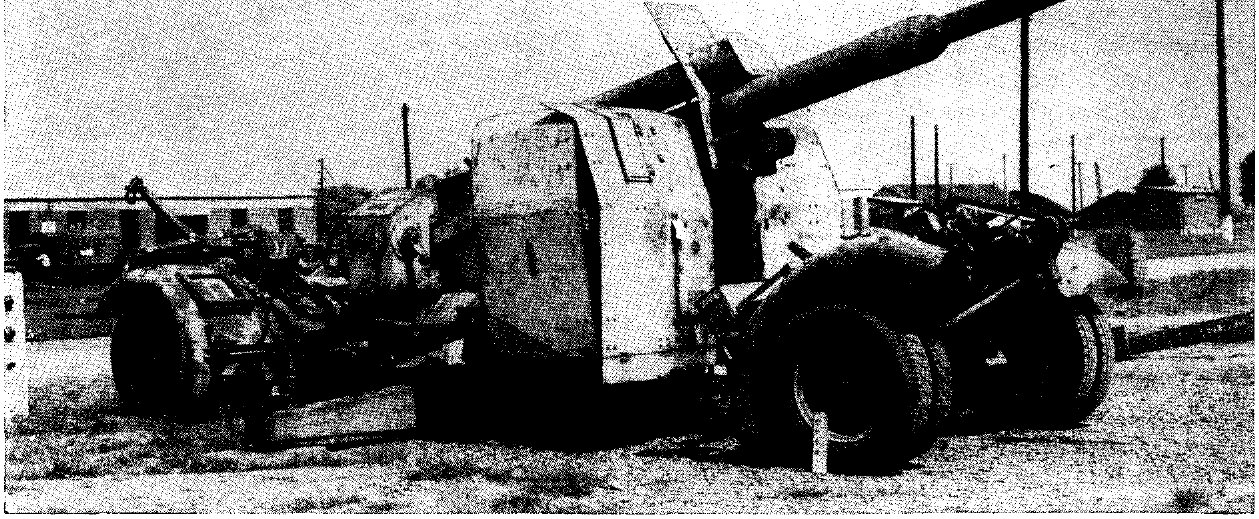
Photographs
Cropped from wartime documents, including some not otherwise cited on this page. Each caption says what the picture is and links to the page it was printed on.
More weapons
Sources
- [1]TM E 9-369A: German 88-mm Antiaircraft Gun Materiel (1943). Pages cited: 6, 7, 9, 95, 110. Not on this site yet; links go to the page on the Internet Archive.
- [2]Handbook on German Military Forces (TM-E 30-451), March 1945 (1945). Pages cited: 352, 353, 393. Not on this site yet; links go to the page on the Internet Archive.
- [3]Handbook on German Military Forces (TM-E 30-451), 1 Sept 1943 (1943). Page cited: 148. Not on this site yet; links go to the page on the Internet Archive.
- [4]Tactical and Technical Trends No. 12 (1942). Pages cited: 14, 15. Not on this site yet; links go to the document on bulletpicker.com.
- [5]Intelligence Bulletin, Vol. 1 No. 9 (May 1943) (1943). Pages cited: 58, 59. Not on this site yet; links go to the page on the Internet Archive.
- [6]Development of German Defensive Tactics in Cyrenaica, 1941 (1941). Pages cited: 30, 33, 37. Not on this site yet; links go to the page on the Internet Archive.
- [7]Company Officer's Handbook of the German Army (1944). Pages cited: 33, 55. Not on this site yet; links go to the page on the Internet Archive.