Messerschmitt Bf 109
Messerschmitt 109 (Me 109)
Wartime US and British reports usually called it the “Me 109”.
Fighter, Germany, as described in 6 wartime documents.
Also written as Me 109E, Me 109F, Me 109G, ME-109 F & G.
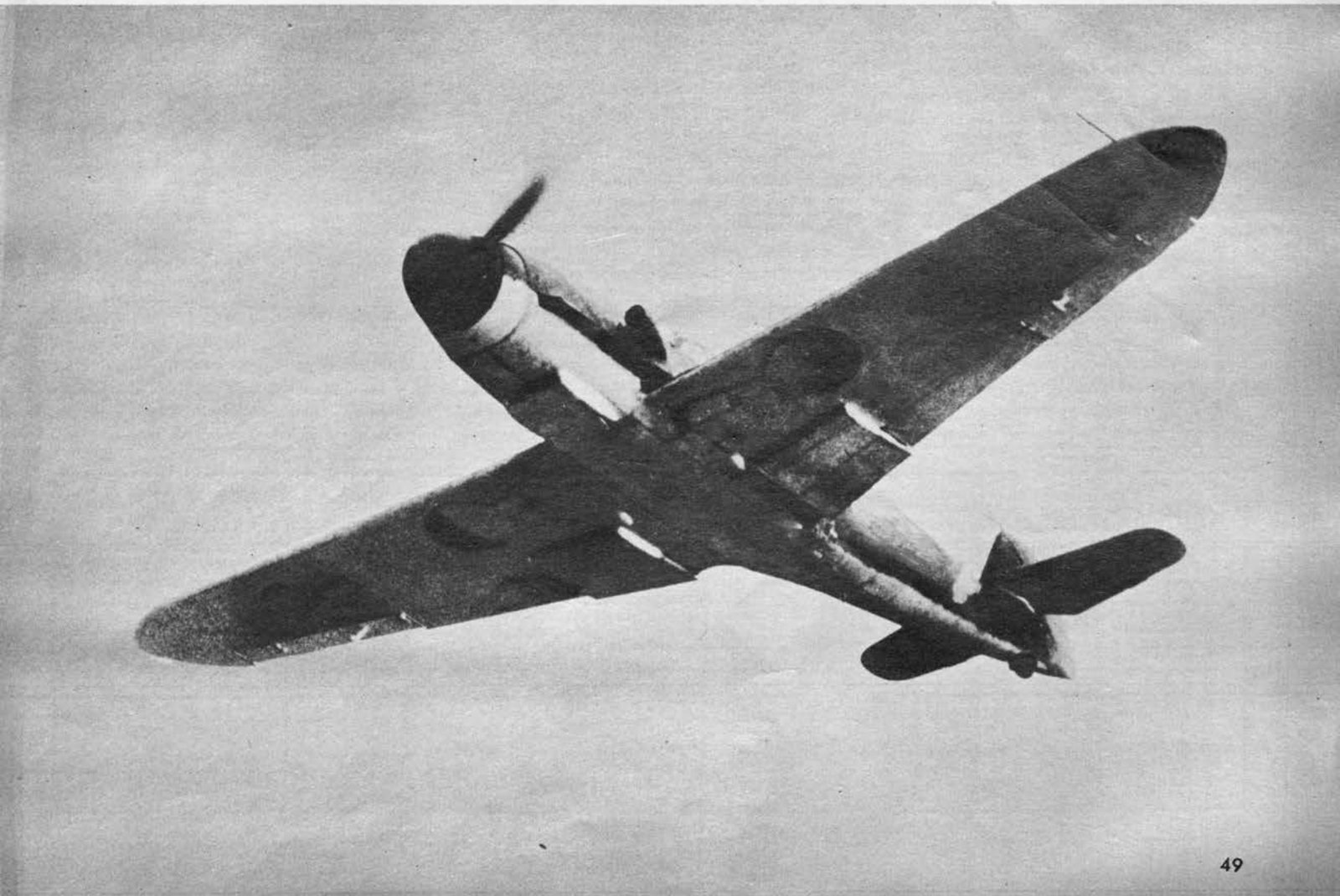
Key figures
The latest figure printed for each. Select one to see every value, its quoted sentence and its page.
- Bomb load
- 550 pounds1942 source
- Maximum speed
- 370 miles per hour at 22,000 feetMe 109F, 1943 source, 2 values
- Service ceiling
- 38,000 feet (37,000 feet with normal load)Me 109F, 1943 source, 2 values
- Maximum range
- 560 miles at 248 miles per hour1942 source
- Span
- 32 ft. 6 in.Me 109E, 1943 source, 3 values
- Length
- 29 ft. 10 in.Me 109F, 1943 source
What the sources say
US Army and Navy recognition publications describe the Messerschmitt Me 109 as a single-engine, low-wing fighter with a thick nose and a single in-line engine [2]. The 1942 FM 30-35 gives two cannon and two machine guns, a 1,450-horsepower Daimler Benz DB 601N engine, a top speed of 380 miles per hour and a service ceiling of 40,000 feet [1].
The 1943 FM 30-30 gives a top speed of 370 miles per hour at 22,000 feet and separates the earlier Me 109E, with square wing tips, from the Me 109F and the high-altitude Me 109G [2]. The 1943 handbook says that one Gruppe could fly the newer Me 109G while others flew the earlier Me 109F [3]. A 1942 AA Command circular reported that many Me 109s in the Middle East were camouflaged dark red and black, with black crosses in red circles [5].
By 1945 TM-E 30-451 says the German Air Force relied chiefly on the Focke-Wulf 190, Messerschmitt 109 and Junkers 88 for most of its fighter, bomber and reconnaissance missions [4]. A 1944 US Army-Navy Journal of Recognition training list includes the Me-109 F and G [6].
Specifications, source by source
Every figure as the document printed it, with the sentence it came from and a link to the page. Values run from the earliest source to the latest. 2 figures changed over time, as new models appeared and intelligence improved.
| Attribute | Value as printedSource and quoted text |
|---|---|
| Role | Single-engine fighter Handbook on German Military Forces (TM-E 30-451, 1 Sept 1943), p. 293“is made up of only two plane types” |
| Crew | One FM 30-35 Identification of German Aircraft (1942), p. 23“One. Two cannon and two machine guns.” |
| Armament | Two cannon and two machine guns FM 30-35 Identification of German Aircraft (1942), p. 23“Two cannon and two machine guns.” |
| Bomb load | 550 pounds (249.5 kg) FM 30-35 Identification of German Aircraft (1942), p. 23“550 pounds.” |
| Armor | 8-mm armor in roofpiece and rear; bullet-proof windshield (8 mm) FM 30-35 Identification of German Aircraft (1942), p. 23“8-mm. armor in roofpiece and rear; bullet-proof windshield.” |
| Engine | One 1,450-horsepower Daimler Benz DB 601N FM 30-35 Identification of German Aircraft (1942), p. 23“One 1,450-horsepower Daimler Benz DB 601N” |
| Maximum speedChanged over time | 380 miles per hour (611 km/h) FM 30-35 Identification of German Aircraft (1942), p. 23“380 miles per hour.” 370 miles per hour at 22,000 feet (595 km/h at 6,706 m)Me 109F FM 30-30 Aircraft Recognition Pictorial Manual (1943), p. 111“MAX. SPEED: 370 m. p. h. at 22,000 ft.” |
| Service ceiling | 40,000 feet (12,192 m) FM 30-35 Identification of German Aircraft (1942), p. 23“40,000 feet.” 38,000 feet (37,000 feet with normal load)Me 109F FM 30-30 Aircraft Recognition Pictorial Manual (1943), p. 111“(with normal load, 37,000 ft.)” |
| Maximum range | 560 miles at 248 miles per hour FM 30-35 Identification of German Aircraft (1942), p. 23“560 miles at 248 miles per hour.” |
| SpanChanged over time | 33 feet (10.06 m) FM 30-35 Identification of German Aircraft (1942), p. 23“33 feet.” 32 ft. 9 in. (9.98 m)Me 109F FM 30-30 Aircraft Recognition Pictorial Manual (1943), p. 111“SPAN: 32 ft. 9 in.” 32 ft. 6 in. (9.91 m)Me 109E FM 30-30 Aircraft Recognition Pictorial Manual (1943), p. 111“a span of 32 ft. 6 in.” |
| Length | 29 ft. 10 in. (9.09 m)Me 109F FM 30-30 Aircraft Recognition Pictorial Manual (1943), p. 111“LENGTH: 29 ft. 10 in.” |
| Models (sub-types) reported | Me 109E, earlier model, now obsolescentMe 109E Handbook on German Military Forces (TM-E 30-451, 1 Sept 1943), p. 293“the Me. 109E, has been largely superseded as a first-line” Me 109FMe 109F Handbook on German Military Forces (TM-E 30-451, 1 Sept 1943), p. 259“other Gruppen have the earlier Me. 109F.” Me 109G, high-altitude versionMe 109G FM 30-30 Aircraft Recognition Pictorial Manual (1943), p. 111“altitude version, the Me. 109G is now coming into use.” ME-109 F & GMe 109 F & G US Army-Navy Journal of Recognition Jan-Apr 1944, p. 47“ME-109 F & G” |
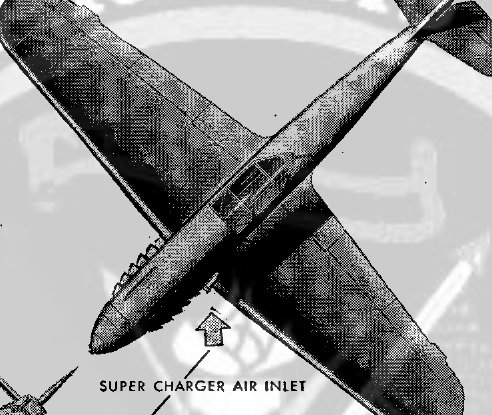
| Recognition features | Camouflage reported as dark red and black, with black crosses in red circlesMiddle East, 1942 AA Command Intelligence Circular 13 November 1942, p. 158“Many of the Me-109's are camouflaged a dark red and black and have black crosses in red circles.” Air scoops under each wing and under nose FM 30-30 Aircraft Recognition Pictorial Manual (1943), p. 111“under each wing and under nose.” Square wing tips on the Me 109E, rounded on the Me 109FMe 109E / Me 109F FM 30-30 Aircraft Recognition Pictorial Manual (1943), p. 111“the earlier model, the Me. 109E, has square wing tips” |
| Role in service (1943-1945 sources) | Major fighter, bomber and reconnaissance type in 1945 handbook Handbook on German Military Forces (TM-E 30-451) (1945), p. 609“The German Air Force has relied chiefly on the Focke-Wulf 190, Messerschmitt 109, and Junkers 88” |
What Allied intelligence knew, and when
FM 30-35 (1942) Me-109 sheet gives a maximum speed of 380 miles per hour and a service ceiling of 40,000 feet.
FM 30-30 (1943) describes the high-altitude Me 109G as 'now coming into use'; its Me 109F sheet gives 370 mph at 22,000 ft.
FM 30-30 Aircraft Recognition Pictorial Manual (1943), p. 111
The 1943 handbook says the Me 109E has been largely superseded as a first-line combat plane by the F and G series.
Handbook on German Military Forces (TM-E 30-451, 1 Sept 1943), p. 293
The Journal of Recognition (January to April 1944) designation table lists ME-109 F & G.
The March 1945 handbook says the Air Force relied chiefly on the Focke-Wulf 190, Messerschmitt 109 and Junkers 88 for most fighter, bomber and reconnaissance missions.
Handbook on German Military Forces (TM-E 30-451) (1945), p. 609
Photographs and drawings
Cropped from wartime documents, including some not otherwise cited on this page. Each caption says what the picture is and links to the page it was printed on.
More aircraft
Sources
- [1]FM 30-35 Identification of German Aircraft (1942). Pages cited: 23, 24. Not on this site yet; links go to the page on the Internet Archive.
- [2]FM 30-30 Aircraft Recognition Pictorial Manual (1943). Page cited: 111. Not on this site yet; links go to the page on the Internet Archive.
- [3]Handbook on German Military Forces (TM-E 30-451, 1 Sept 1943) (1943). Pages cited: 259, 293, 294. Not on this site yet; links go to the page on the Internet Archive.
- [4]Handbook on German Military Forces (TM-E 30-451) (1945). Page cited: 609. Not on this site yet; links go to the page on the Internet Archive.
- [5]AA Command Intelligence Circular 13 November 1942 (1942). Page cited: 158. Not on this site yet; links go to the document on the CGSC Digital Library.
- [6]US Army-Navy Journal of Recognition Jan-Apr 1944 (1944). Page cited: 47. Not on this site yet; links go to the page on the Internet Archive.